Interactions across Displays and Space
A Study of Virtual Reality Streaming Practices on Twitch
Published in ACM ISS (Interactive Surfaces and Spaces) 2023

Introduction
Live streaming has grown rapidly, with platforms like Twitch reporting over 2.5 million concurrent viewers and 1.3 trillion minutes of content watched in 2023. While most streams are viewed on 2D displays, VR is increasingly being used for live game sessions, with streamers using head-mounted displays while viewers watch on conventional devices. With continued investment from companies like Meta, Google and Apple, VR streaming is becoming a significant part of the live content ecosystem. However, research in this area remains limited compared to studies on 2D live streaming This study focuses on VR game streaming as a starting point for exploring the unique challenges and opportunities VR streaming presents. Unlike traditional 2D streaming, VR streaming introduces distinct setup differences, control limitations, and interaction patterns, highlighting the need for further research into immersive interactions across physical and digital spaces.
Research Questions & Process
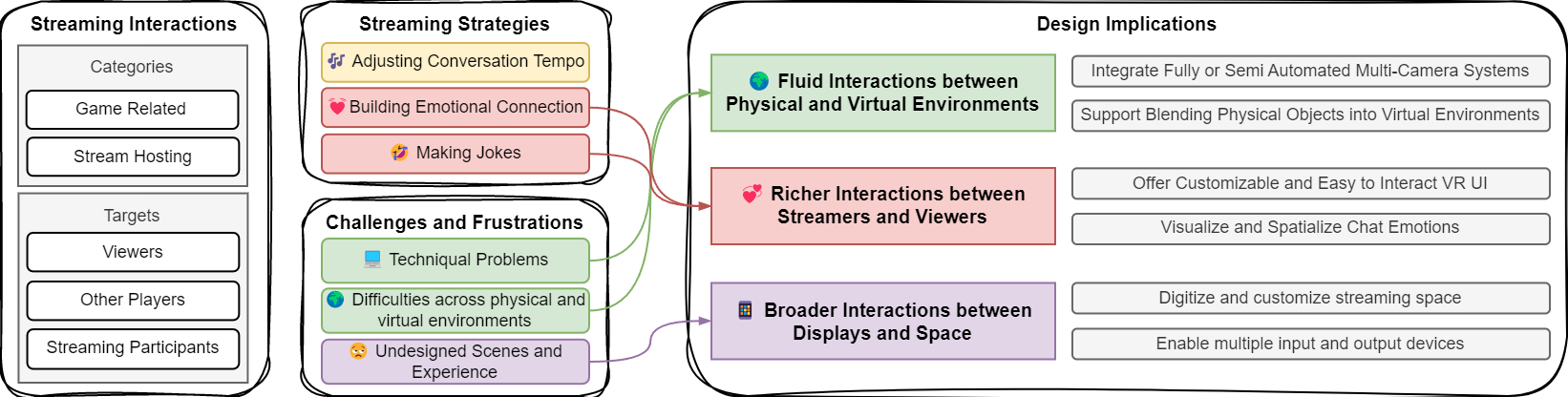
- RQ1-1 - Interactions: a) What are the common interactions between the streamers and the viewers? b) What are the common interactions between the streamers and other streaming participants?
- RQ1-2 - Strategies: What are the common strategies the streamers use to engage their viewers and improve their watching experience?
- RQ1-3 - Challenges: What are the frustrations and challenges that the streamers have in their current streaming workflows?
To address these research questions, we conducted a multi-phase thematic analysis on 34 streaming videos from 12 VR streamers on Twitch. Our results distill a range of interaction styles and strategies that the streamers commonly use to interact with and engage their viewers. We also identify the challenges and frustrations that streamers face producing engaging VR streams. Based on these insights, we also discussed potential design implications for future tools that could better support the growing VR streaming community.
Research Contribution
- Empirical knowledge of common interaction styles, strategies, and challenges for VR streaming;
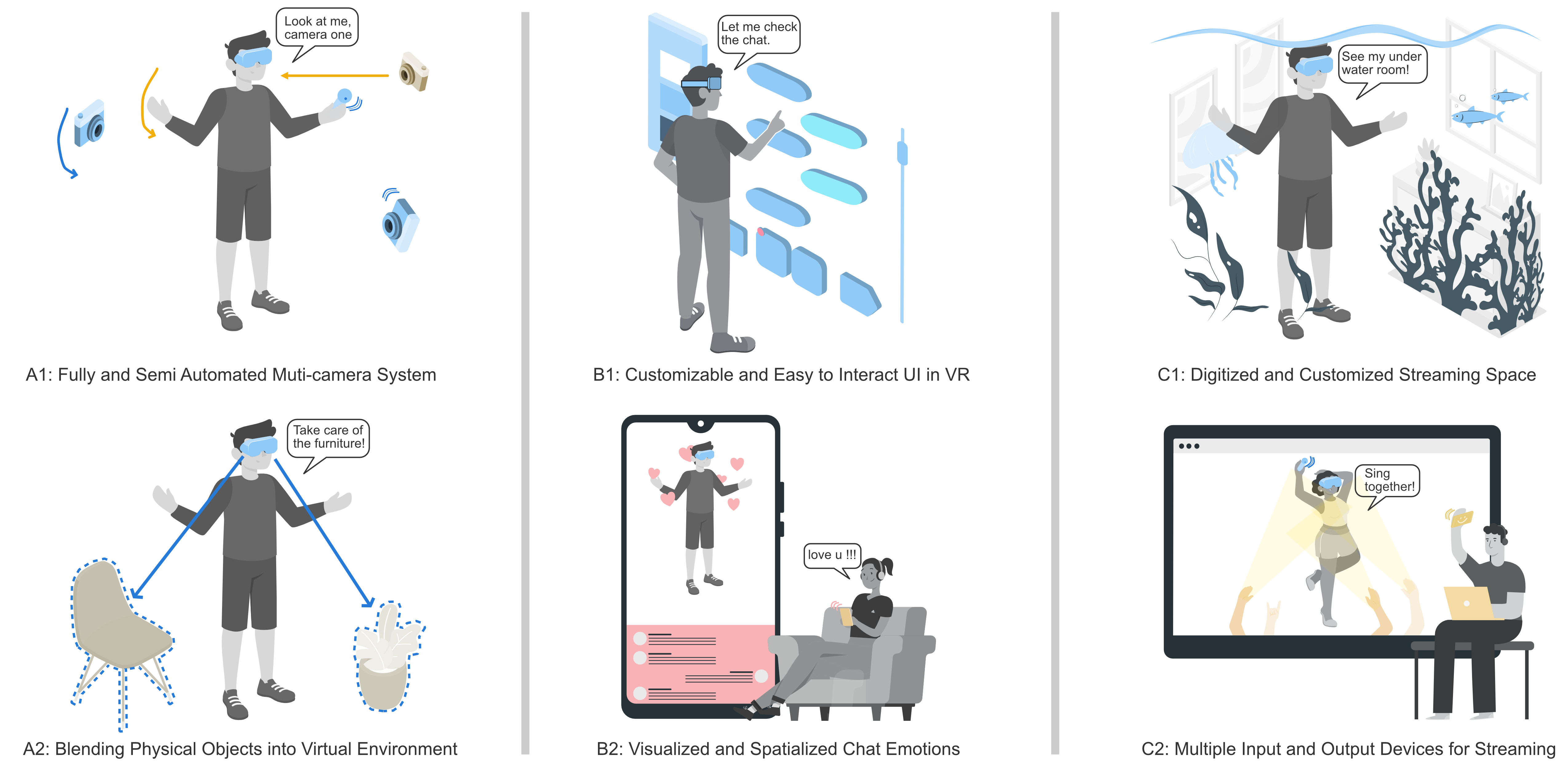
- Design implications for future design for a more engaging VR streaming experience and better interaction techniques across displays and space.